Hostels serve as homes away from home for students, and they should nurture a healthy, respectful balance between academics and recreation. With WHO reporting that India has one of the highest levels of depression—affecting nearly one in six children and teenagers—it becomes crucial to design spaces that uplift daily life and support mental well-being. One of the most effective approaches is to create environments that radiate positivity. Green and recreational zones where students can gather, relax, and connect become essential parts of this experience.
The vision for this project is to design a green hostel that interlinks every space through a garden, much like a bird’s nest perched atop a tree—safe, nurturing, and deeply connected to nature.
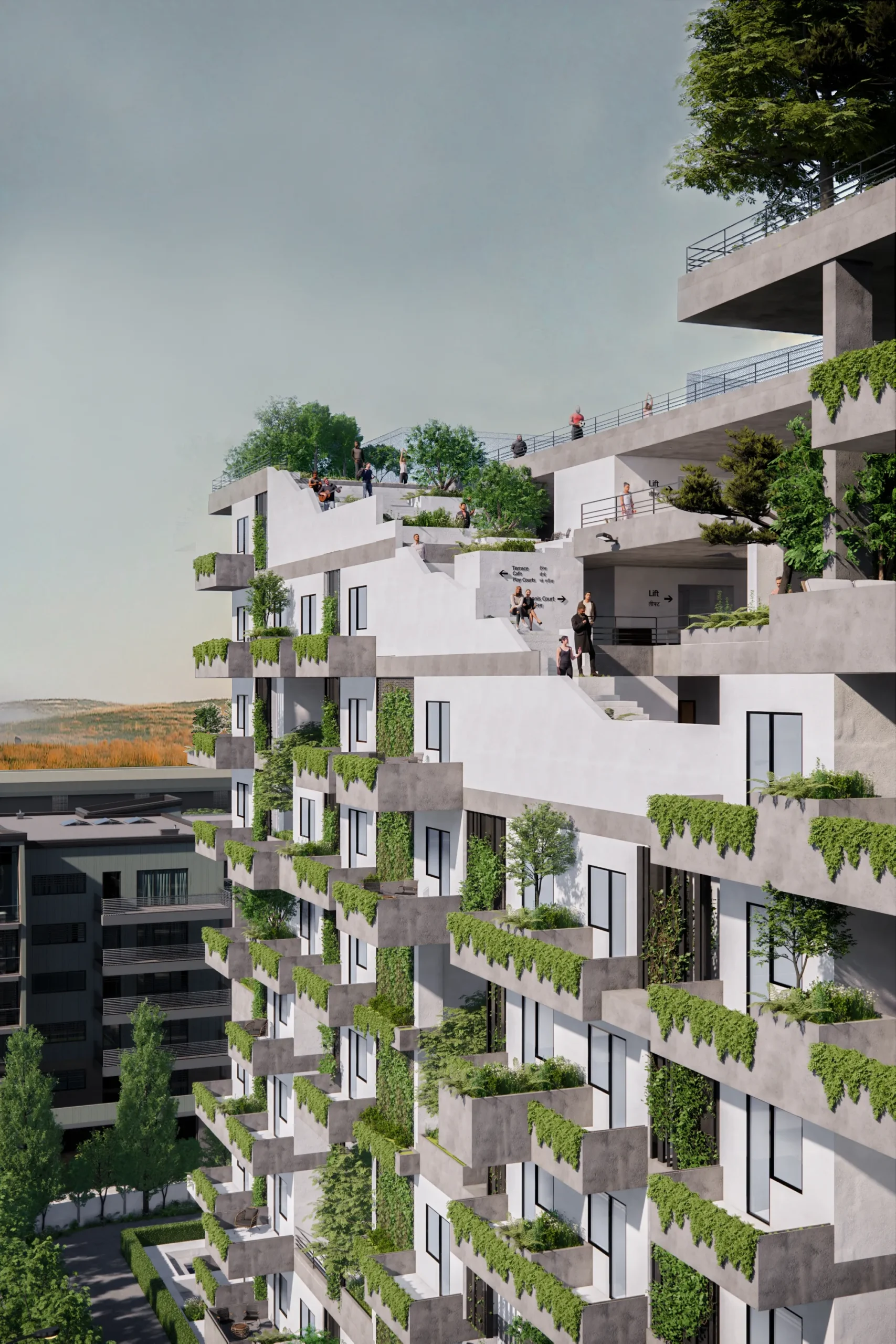
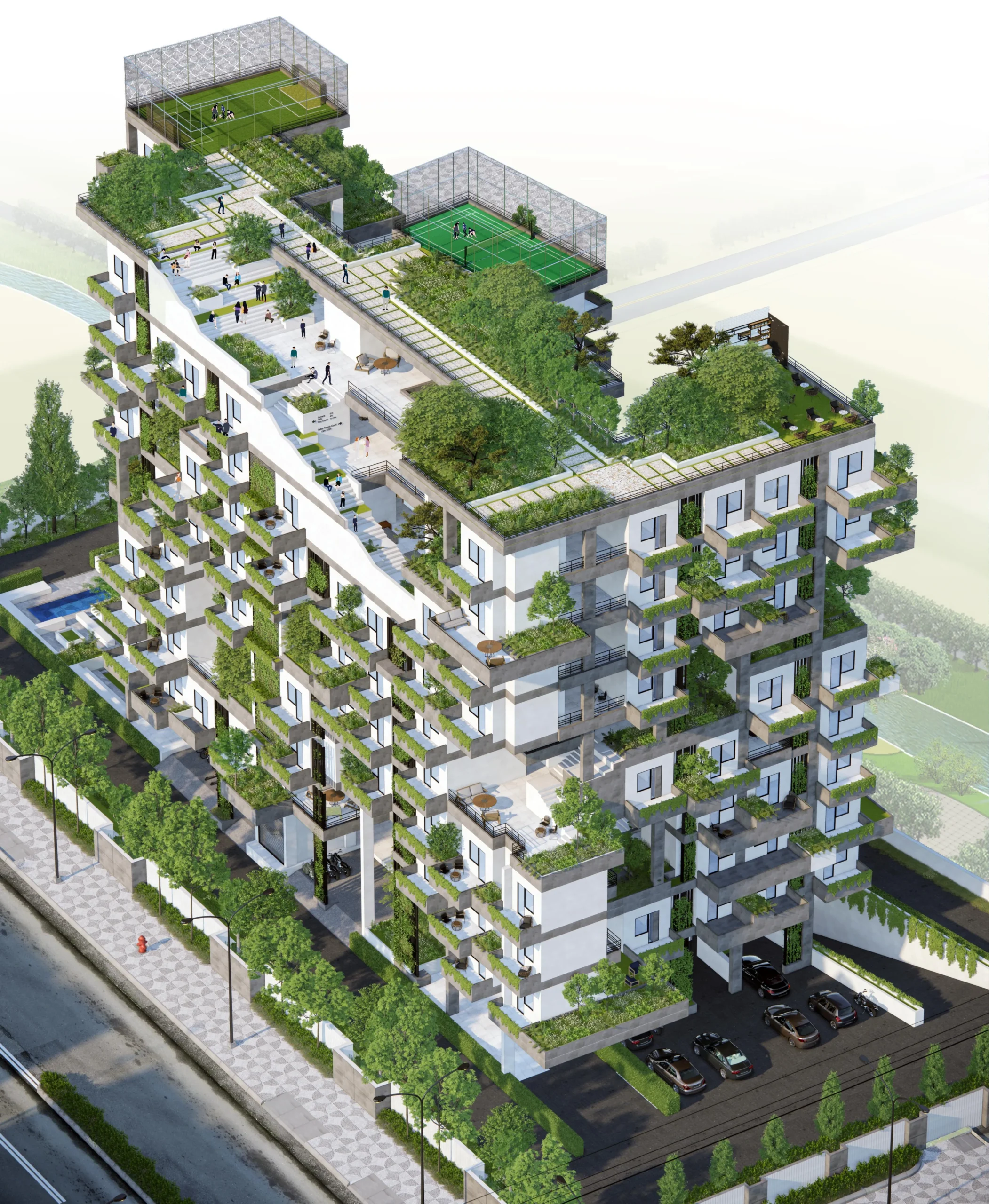
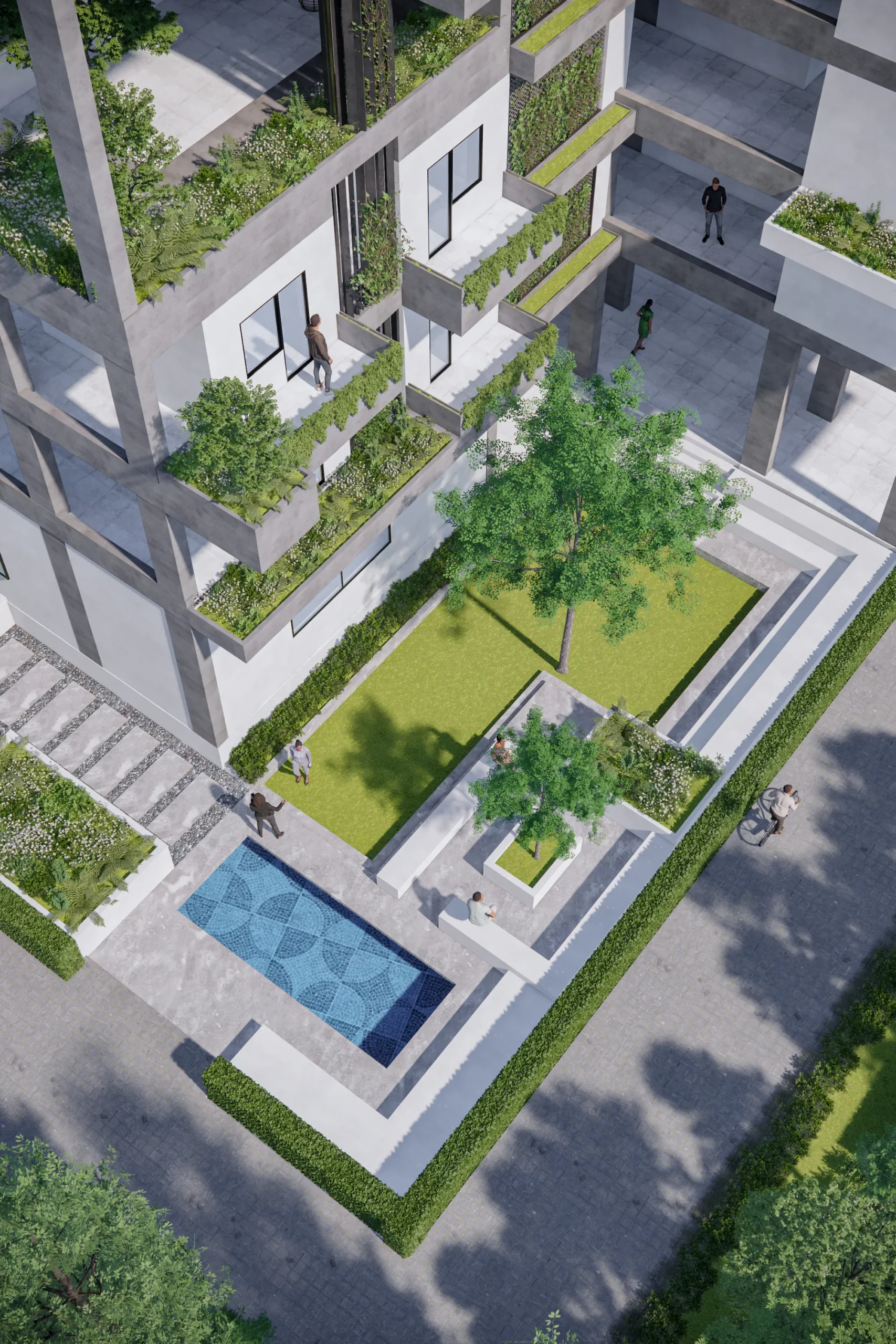
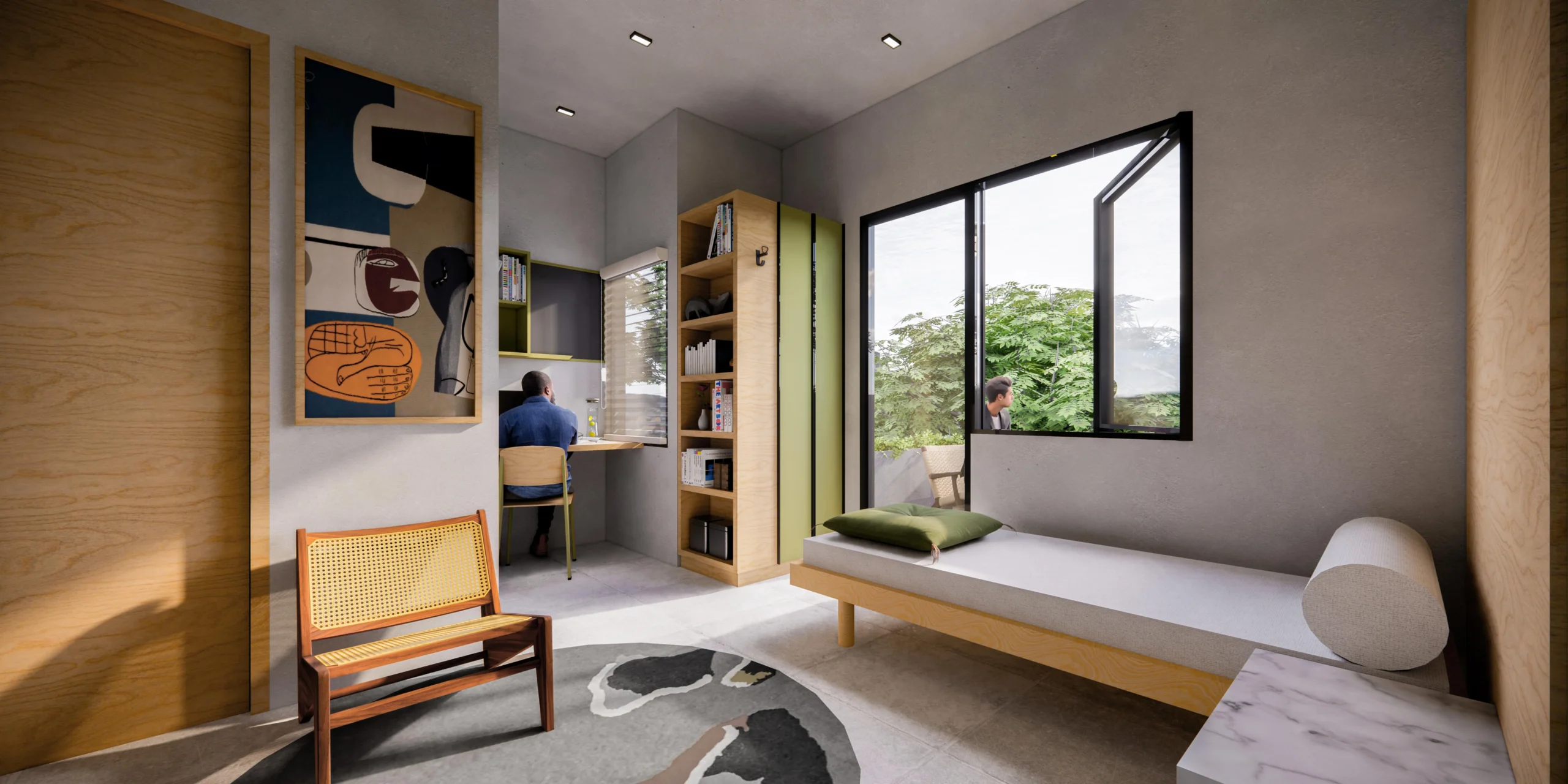
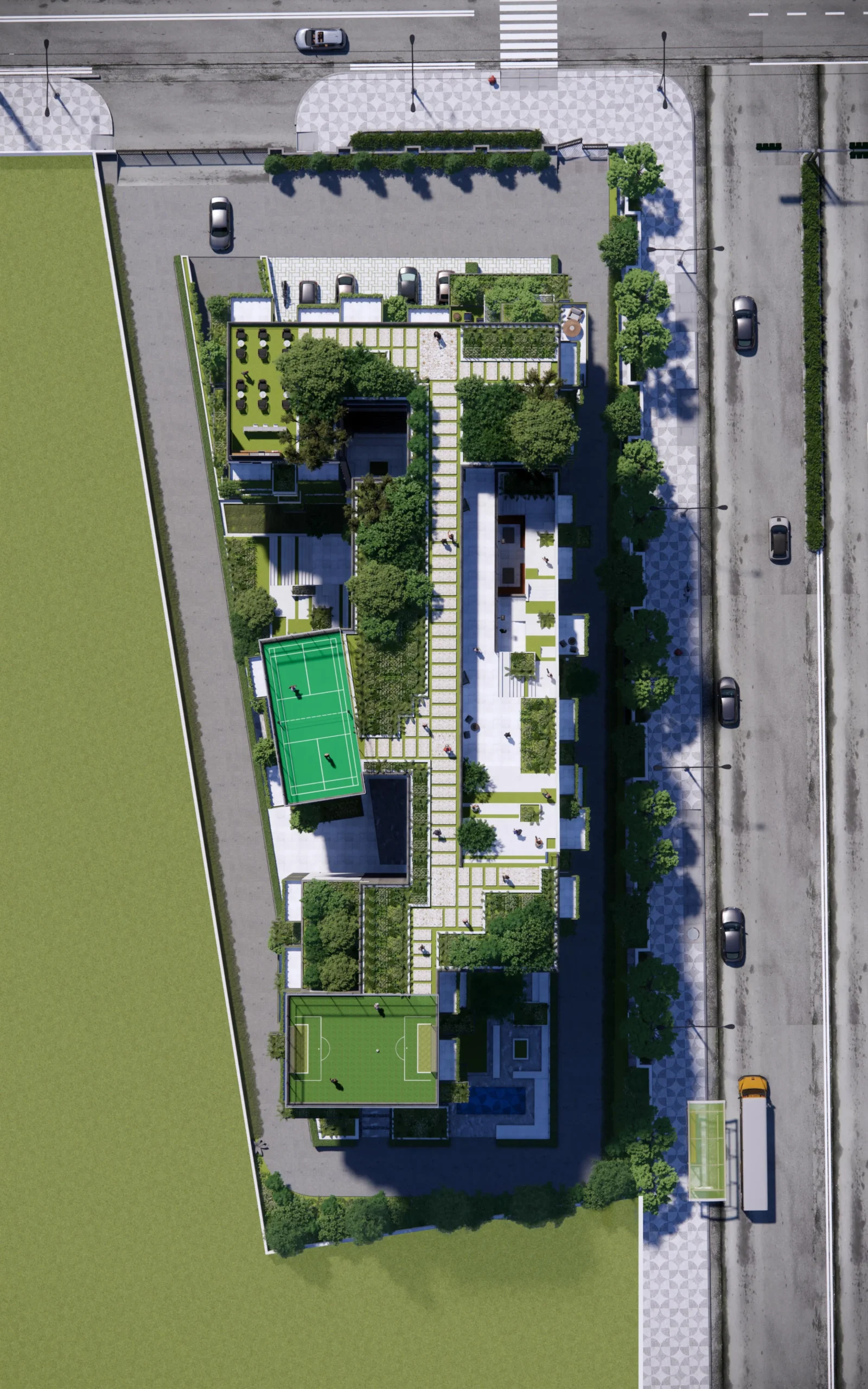
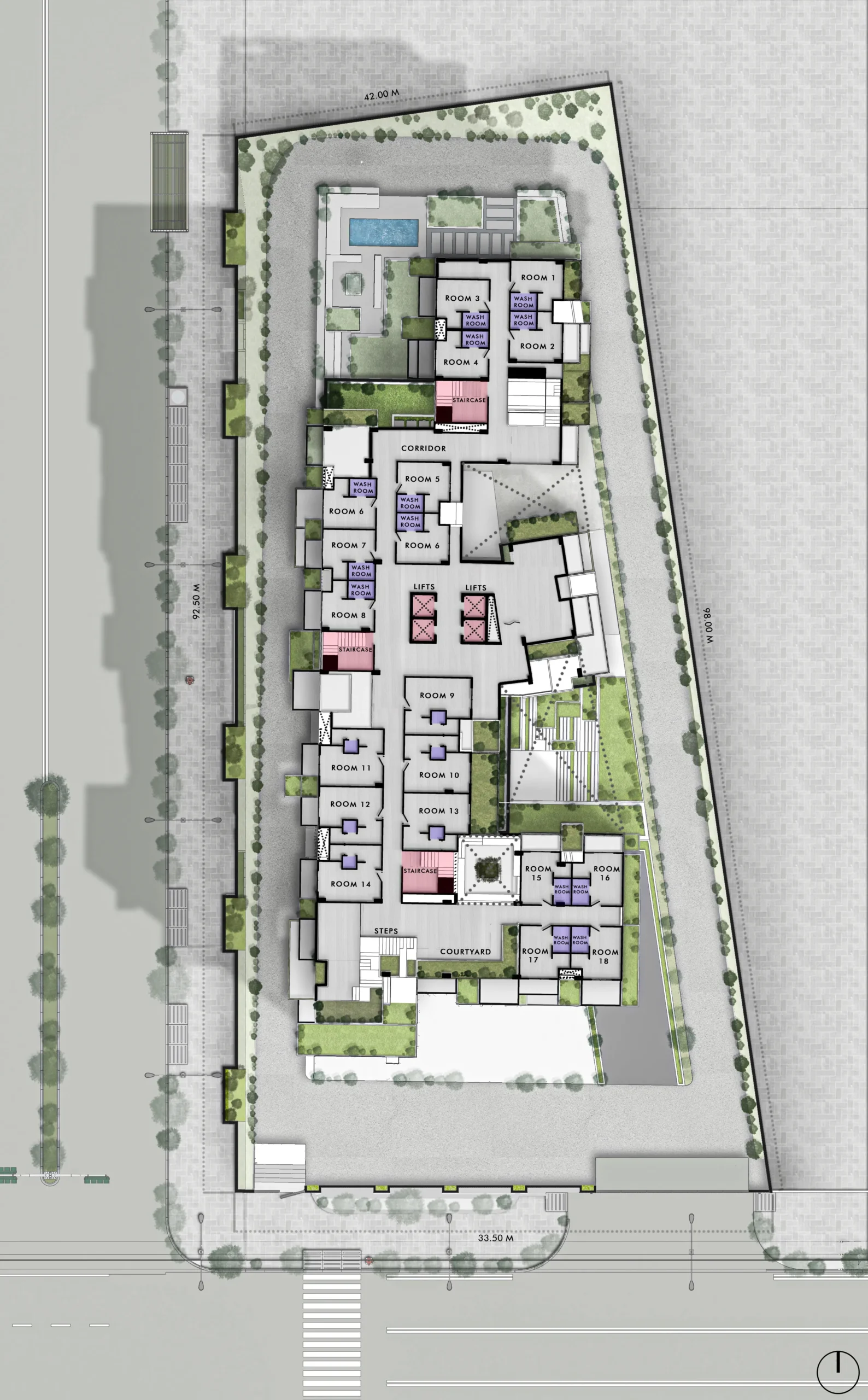
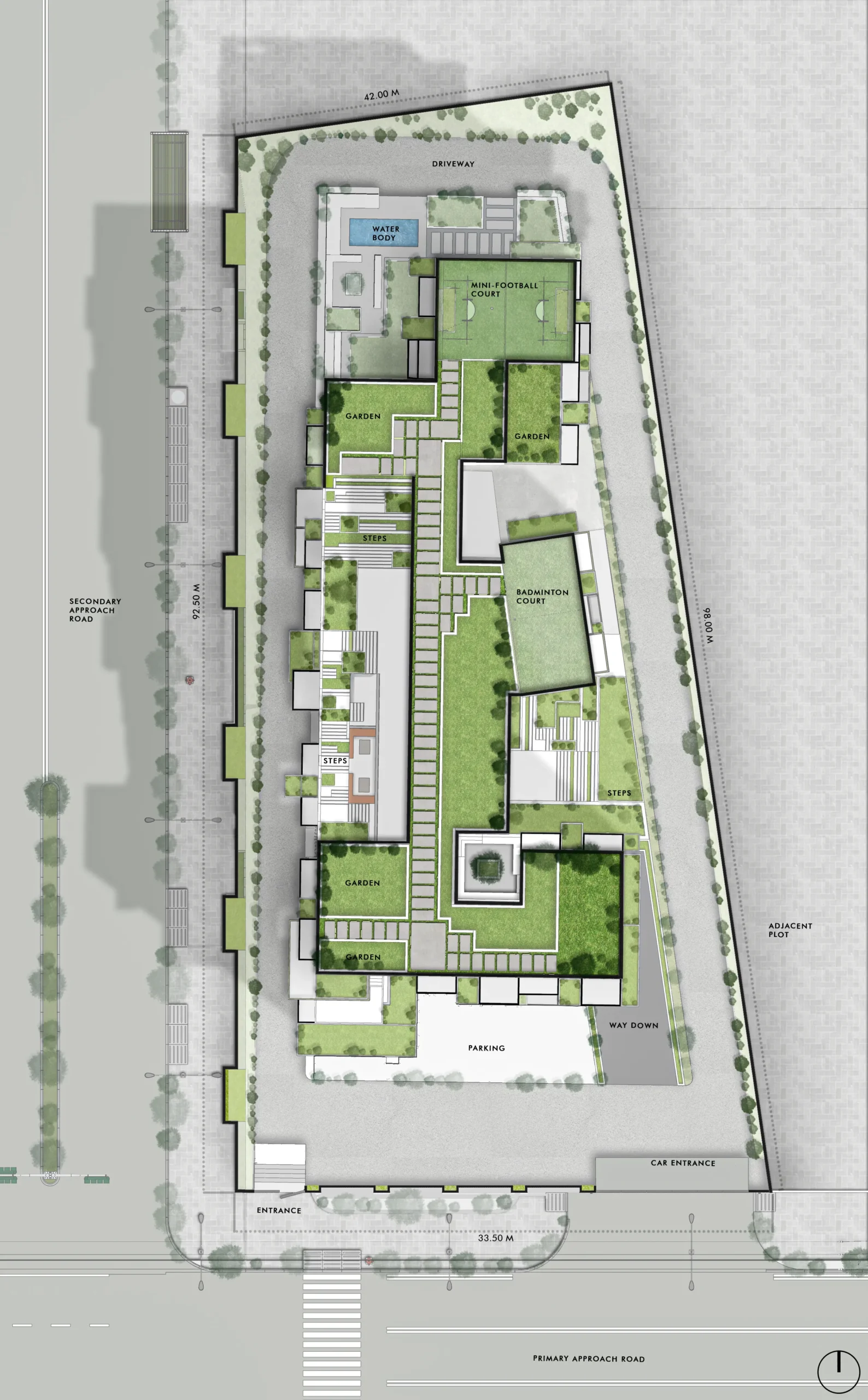
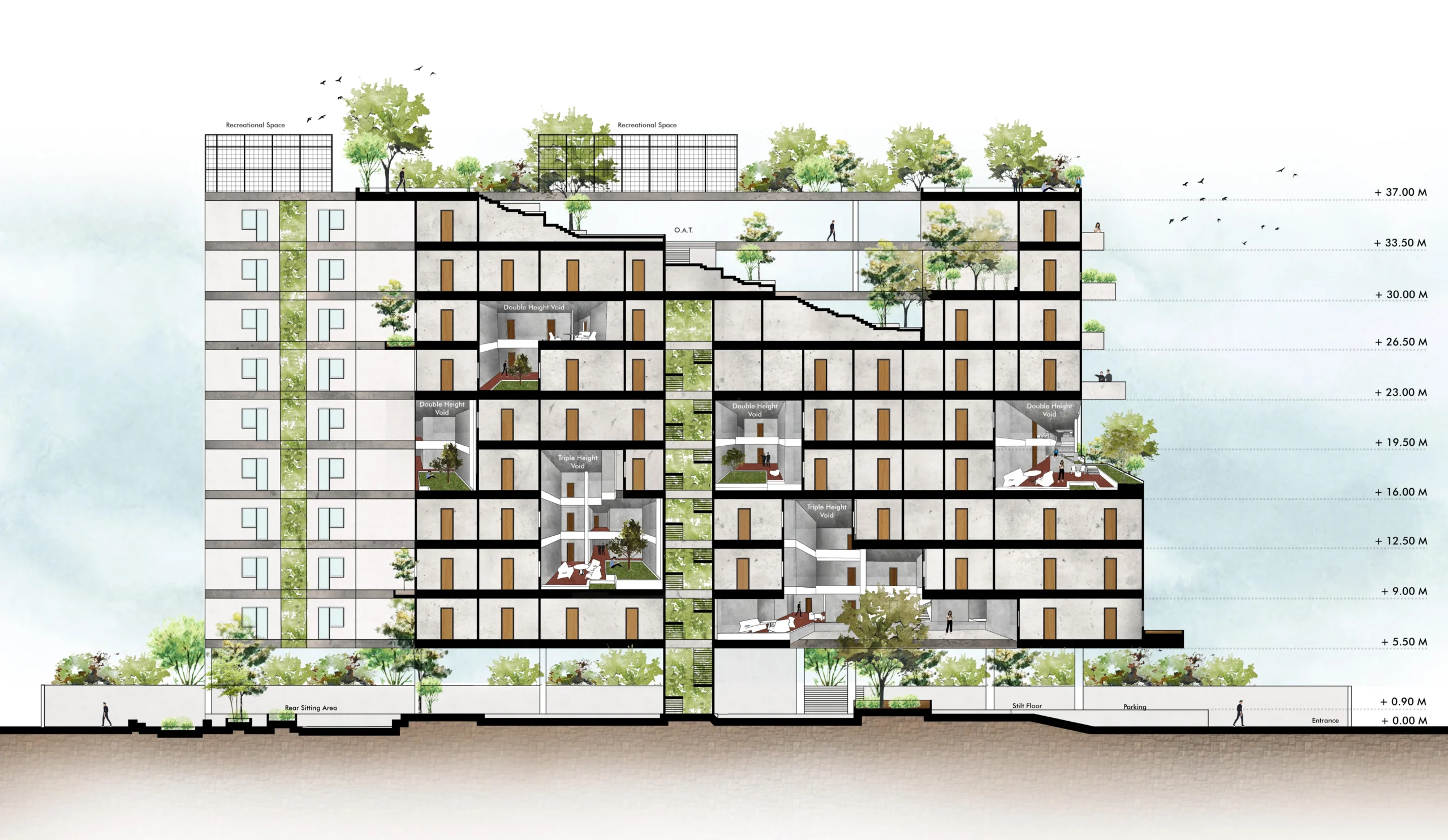
The site is long and narrow, so the concept began by establishing a central axis along this linear strip. Each unit was carefully planned within the limits of 35% ground coverage, allowing the design to open into multiple courtyards and cutouts on all sides. No two plans are identical—each level shifts and adapts to the site, creating voids that hold greenery and trees. This ensures that every unit, regardless of its floor, remains visually and physically connected to nature.
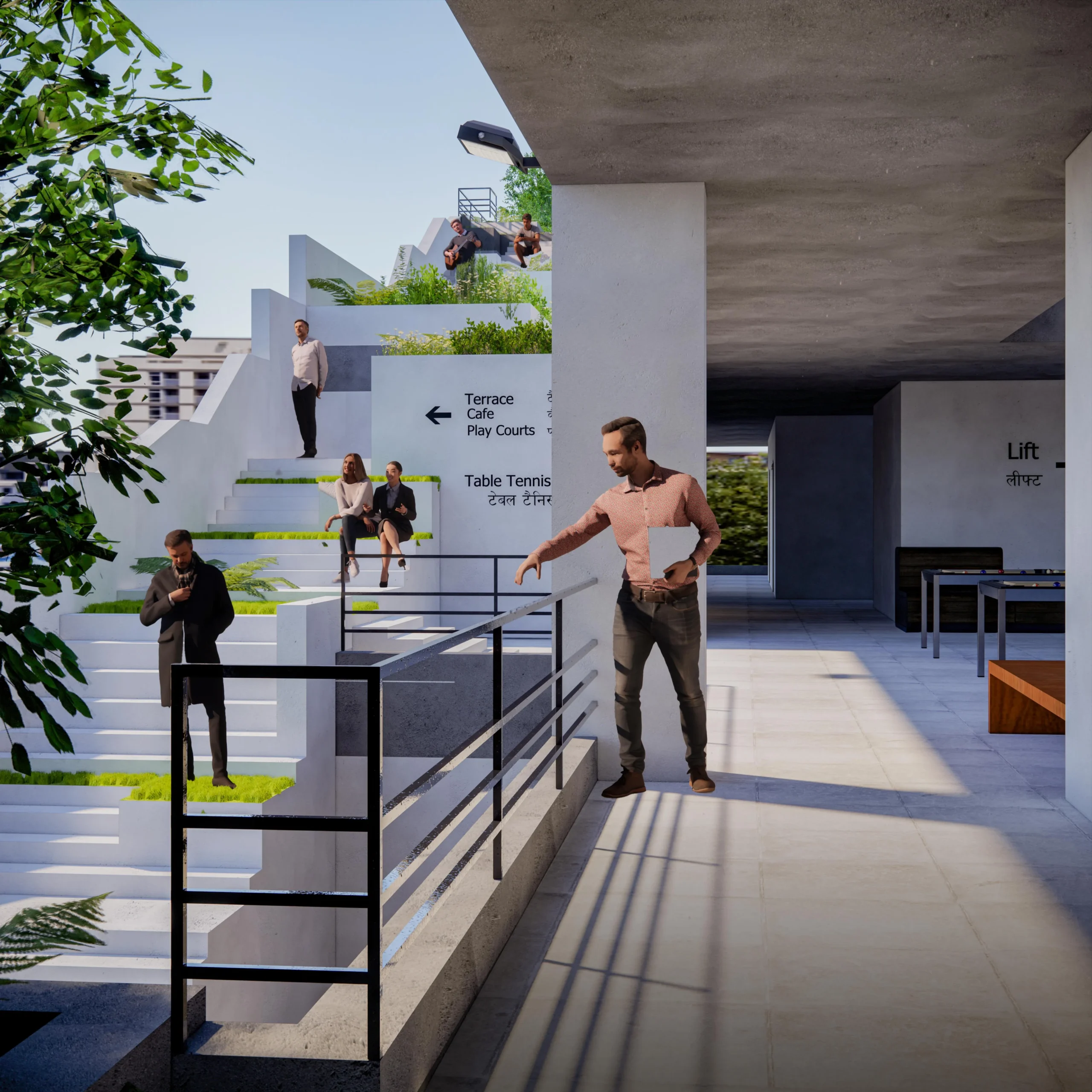
These voids enable natural cross-ventilation as wind moves through the structure, while the trees help cool the airflow, offering relief in Noida’s hot climate. They also become informal gathering pockets that encourage visual and social interaction across levels. Connected by staircases, steps, and platforms, these shared zones make the building lively and engaging.
As shown in the sectional perspective, each space opens to another, creating layered views and varied experiences. The balconies differ in size and depth, extending in and out to form a rhythmic play of platforms and projections. This variation gives the façade a dynamic character, making each space feel as though it naturally grows out of the structure.
Typical hostels stack rooms vertically, leaving little room for interaction, but The Urban Nest breaks this pattern by encouraging spontaneous encounters and conversations across different levels. Landscaped steps act as green seating zones where students can pause, relax, and connect with one another, fostering a strong sense of community. Every element of The Urban Nest reflects openness, interaction, and the calming presence of nature, creating a healthier and more engaging place to live.