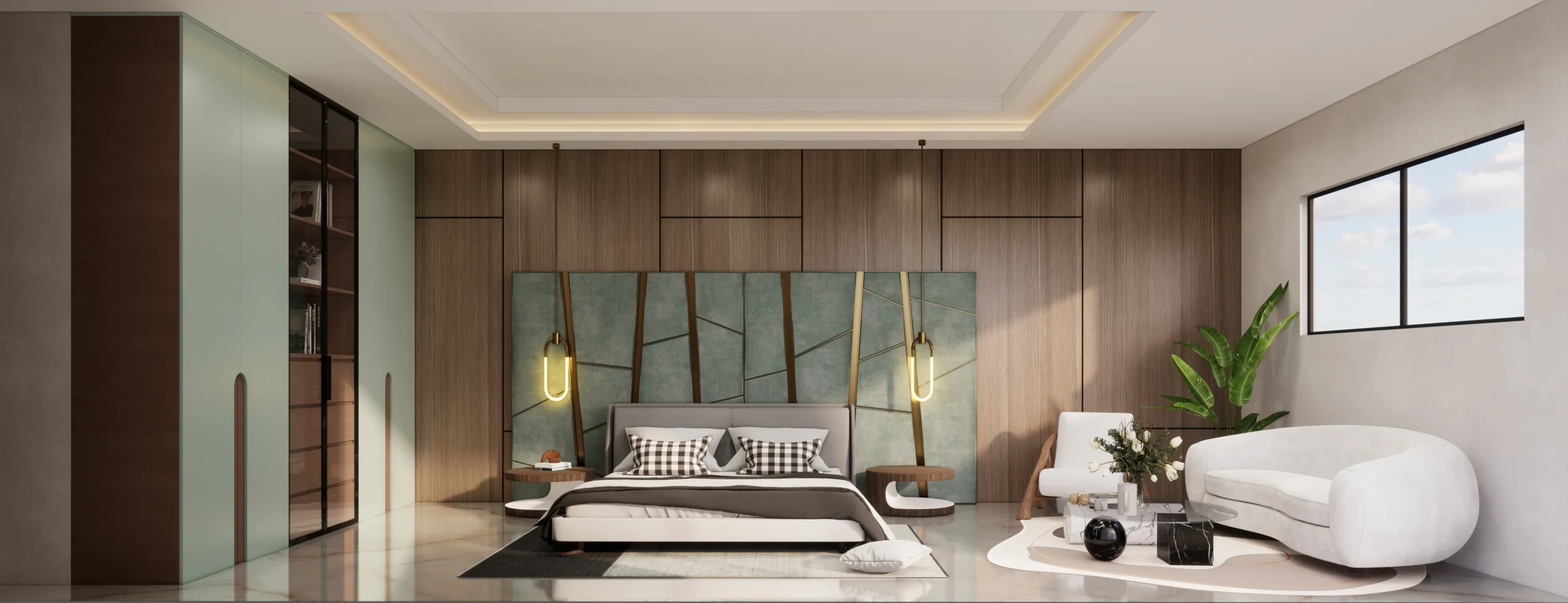
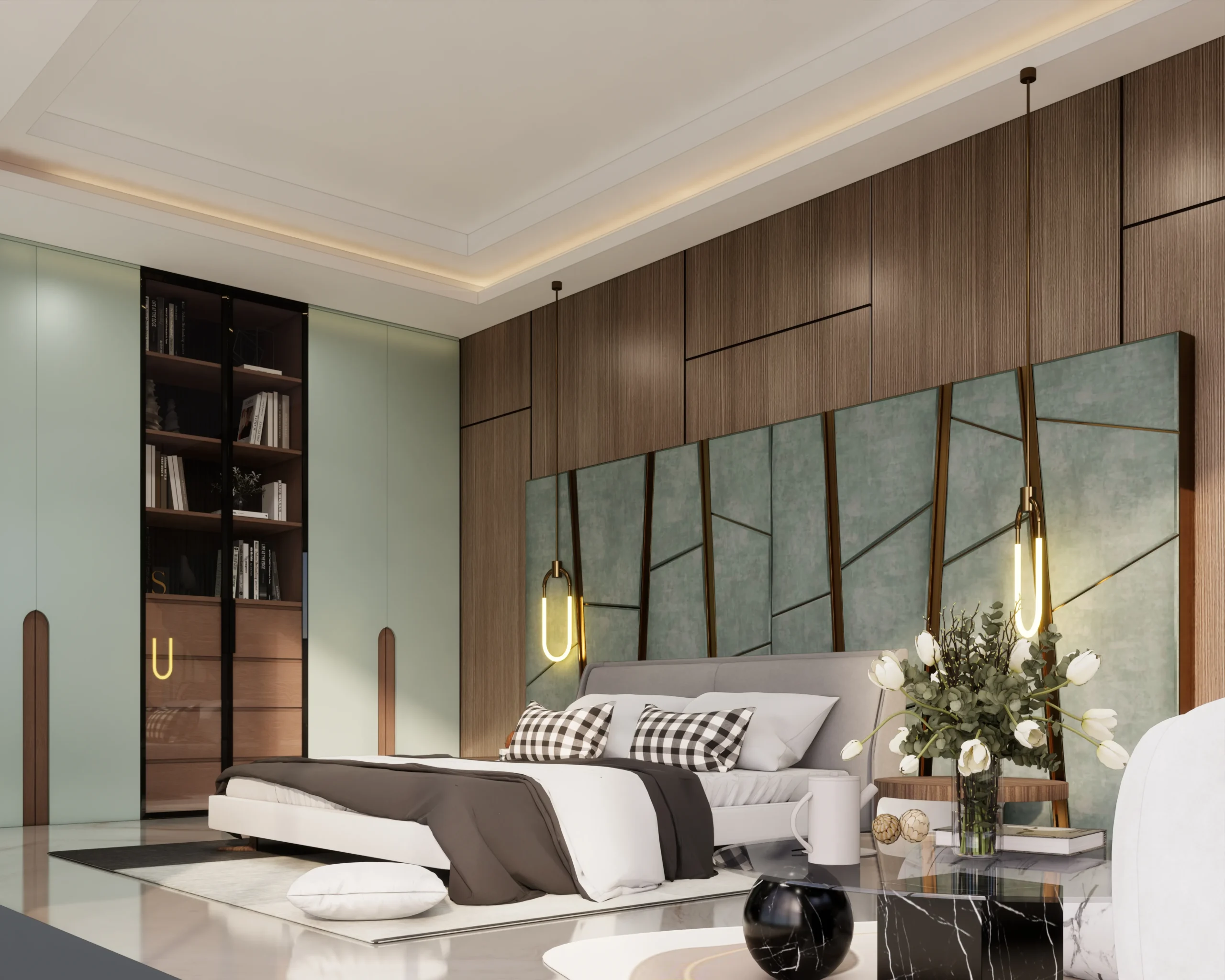
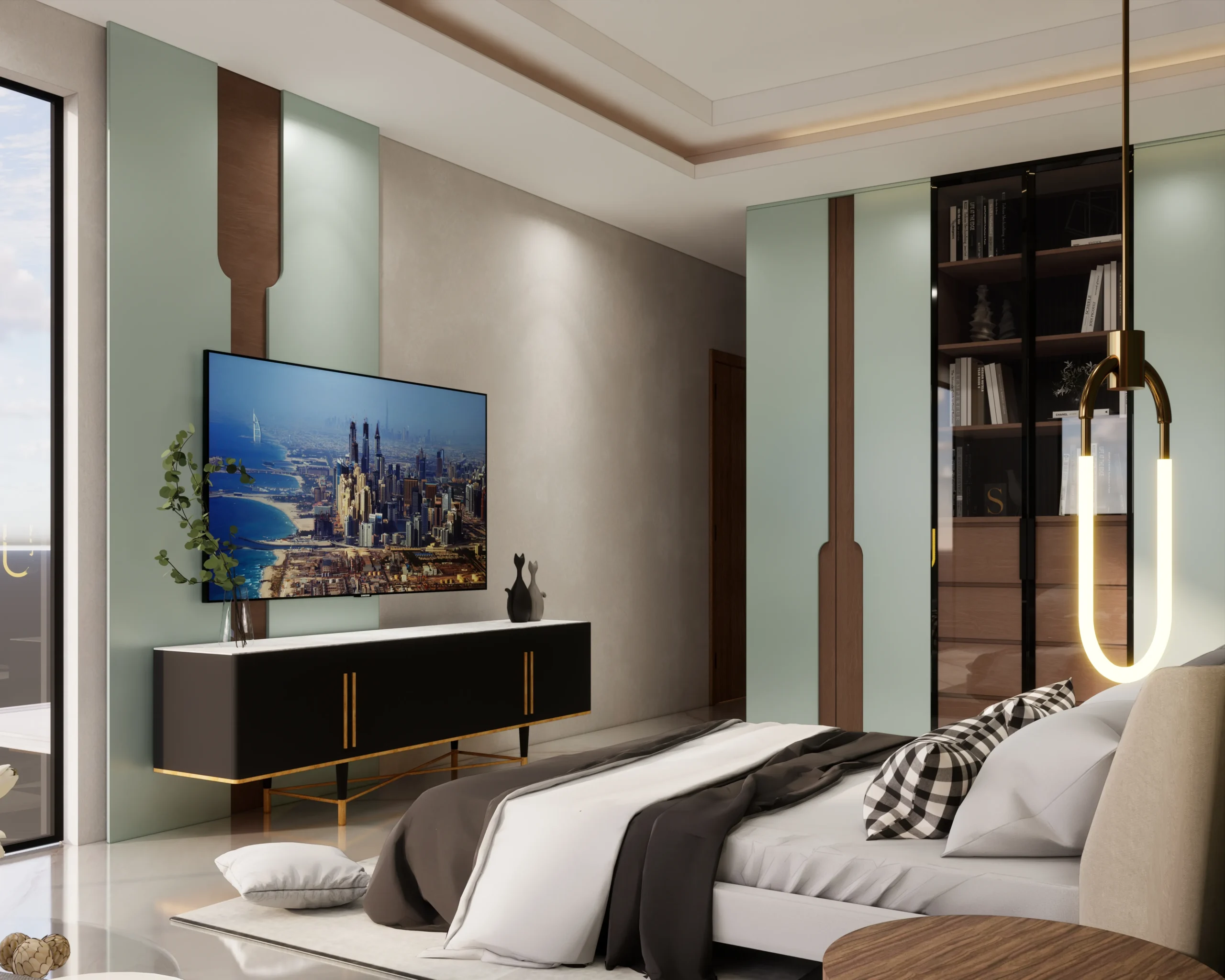
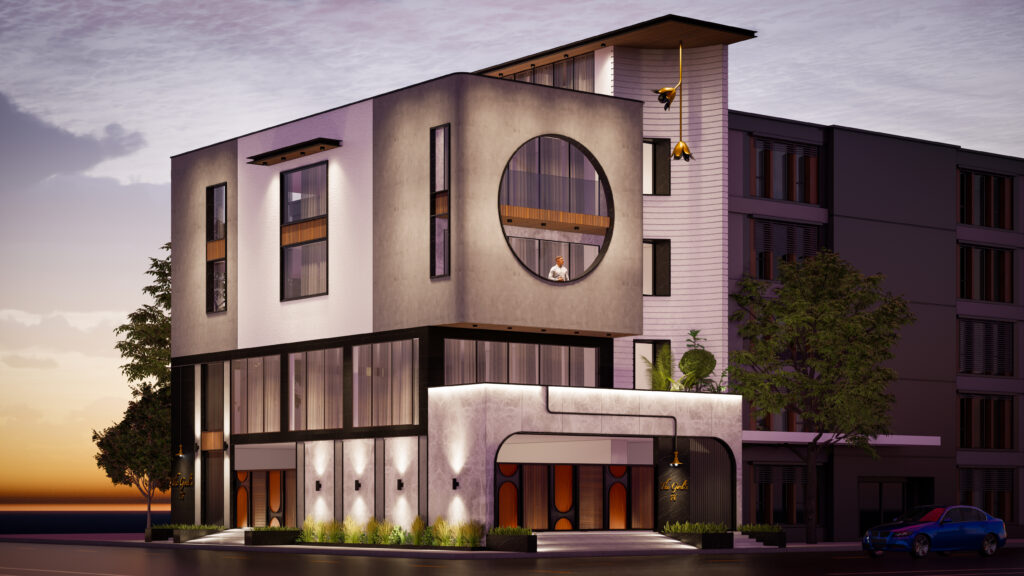
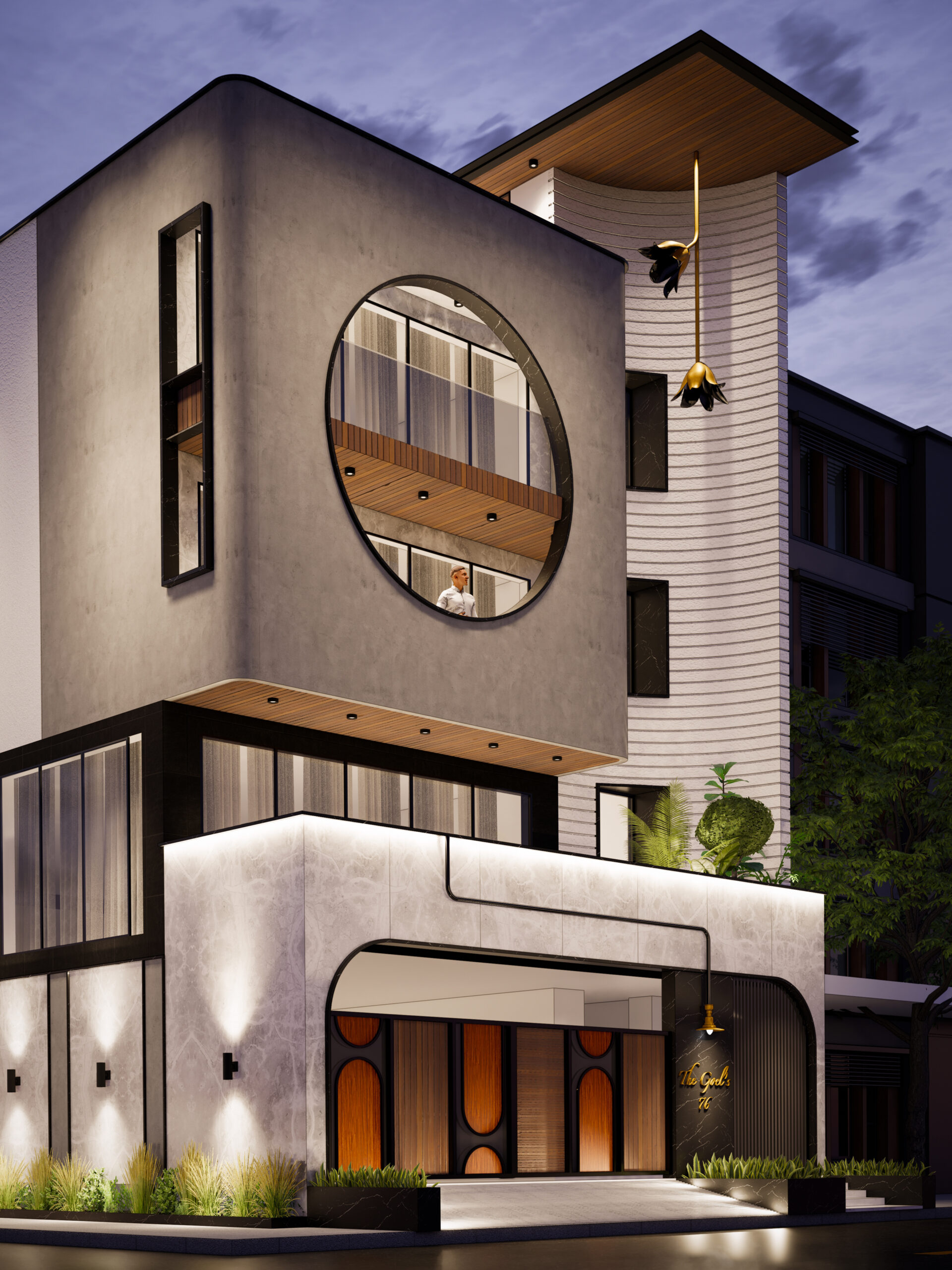
Nestled in the serene yet well-connected neighborhood of Janakpuri, Residence 76 is a contemporary luxury apartment that blends modern sophistication with Vaastu-guided spatial harmony. Designed as an urban sanctuary, the home expresses understated opulence through sculptural forms, refined materials, and carefully curated light. Its façade, marked by a sweeping curved window, becomes the defining feature—flooding the interiors with natural light and creating a dynamic visual dialogue between the private home and the lively street outside. The interplay of glass, stone, and metal adds a refined contrast, balancing solidity with transparency.
Inside, the spatial planning unfolds in gentle layers. The first floor acts as an open, social domain, where the living, dining, and kitchen areas flow seamlessly into one another. A double-height volume amplifies openness, while a sculptural lighting installation drops through the void, visually linking the two levels. The neutral palette—warm woods, textured stone, and soft metal accents—adds depth and tactility to the minimalist aesthetic. The upper floor transitions into a more private zone, with bedrooms and study areas designed for comfort, calm, and Vaastu harmony. Thoughtful orientation ensures every room receives ample natural light and ventilation, while curved corners and built-in furniture echo the fluid, sculptural language of the home.
As the architecture progresses into its finer layers, the relationship between materiality and movement becomes increasingly significant. Surfaces are chosen not only for their visual softness but also for how they feel—responding to touch, temperature, and the way they age over time. Floors transition into walls with subtle reveals that create a floating effect, giving the interior a continuous, effortless flow. Every threshold is deliberate, guiding the eye while maintaining a sense of quiet restraint.
Light adds another essential dimension to the home. Daylight is drawn deep inside through carefully placed openings that cast shifting patterns across floors and walls, subtly marking the passage of time and making the home feel alive. By evening, concealed lighting takes over, creating gentle gradients instead of harsh illumination. This softness enhances comfort and encourages the mind to slow down after a long day.
Outdoor extensions of the home are crafted with the same level of care. Small landscape pockets offer changing sensory experiences—from fragrant planting to textured paving that engages the feet. These exterior moments help moderate heat, support biodiversity, and provide natural privacy without heavy interventions. The intention is to create a porous boundary between built and unbuilt, allowing the surroundings to feel like an effortless continuation of the architecture.
Elevation & Details
Die Spielauswahl bei spinsy casino online umfasst mehrere hundert verschiedene Slots und Tischspiele.
Das monsterwin casino arbeitet mit renommierten Spieleentwicklern zusammen und garantiert dadurch höchste Qualität.